KiteActive / event recap / Travel / Aug 25, 2025
TAS Downwinder
 By Felix Maks
TAS (Terschelling – Ameland – Schiermonnikoog 65 km) Downwinder, 17 September 2022
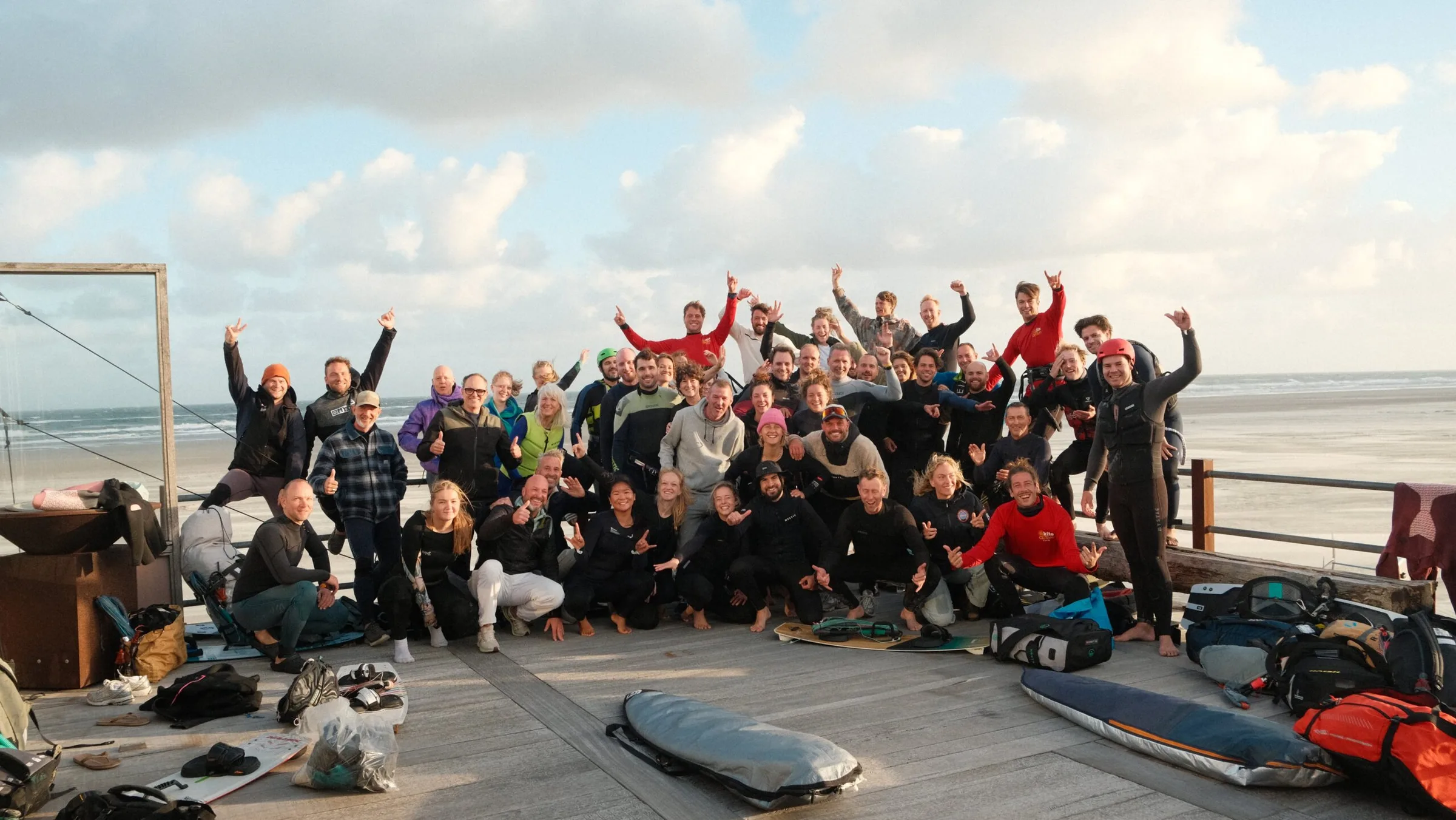
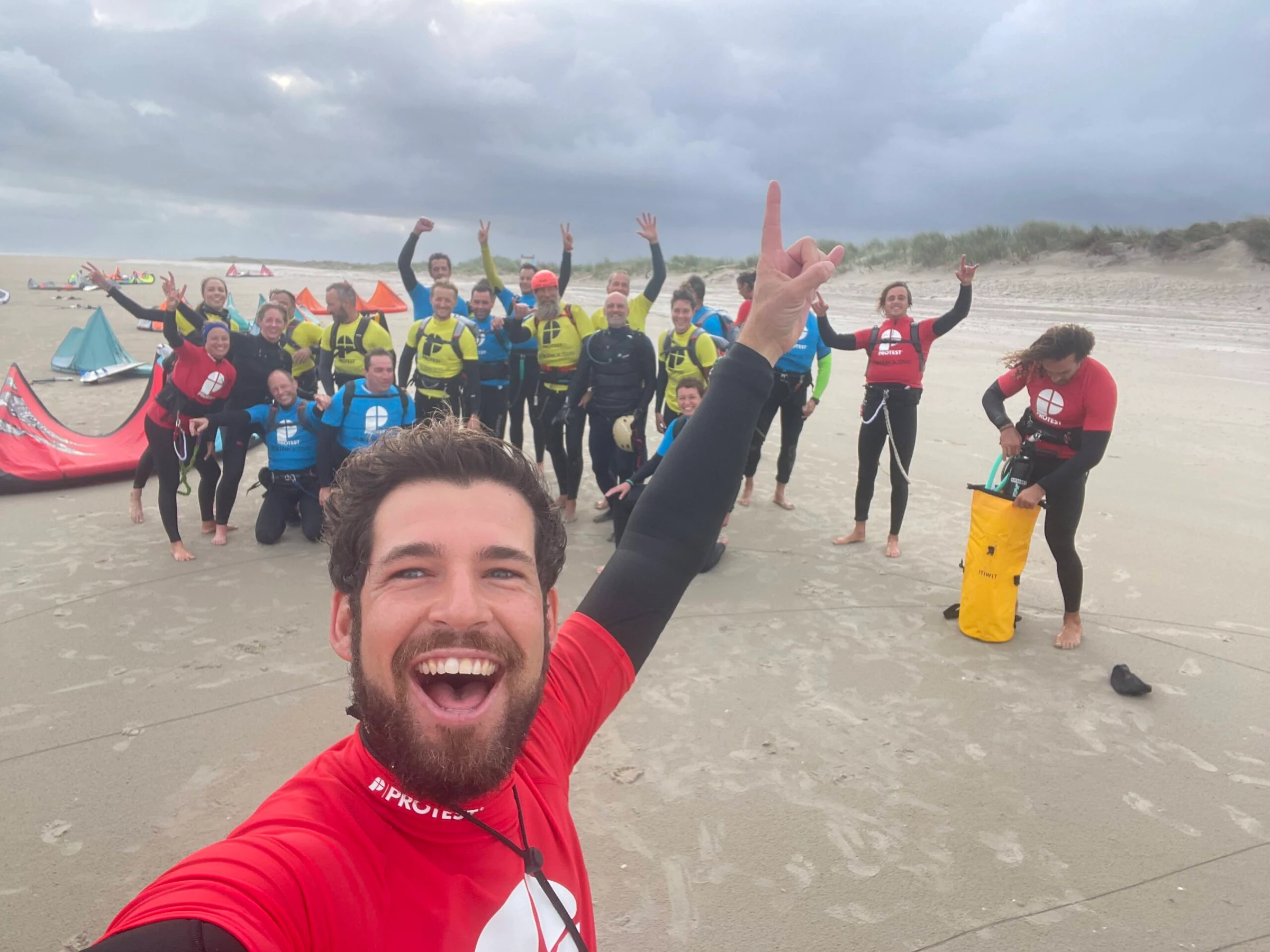
The forecasts were too wild to take a group of 40 across all the Dutch Wadden Islands. With predictions of 30–35 knots, all-day rain and 3–4 metre waves, it’s a real challenge with serious risks. Still, these are the conditions advanced kiters dream of, so we couldn’t resist running the TAS downwinder last weekend. We left by boat at 12:00 to Terschelling with an 8m2 Pivot and a 7m2 Core Section, a wave board and a twintip. We had a waterproof backpack with clothes, a SafeTRX watch, our phones, some cash, energy bars and water. Arriving on Terschelling we took the bus to West aan Zee and stepped into a brutal NNW wind — a playground of towering waves and perfect conditions. After inflating and getting everything ready we hit the water and the first squall hit straight away. The wind built to about 40 knots and the driving rain reduced visibility to almost nothing. Luckily, rain never stays long on the islands and the squalls get blown apart quickly. It was a wild mix of torrential rain, a pale slice of sun and some brilliant rainbows.
The distance to cover was about 65 km and because the wind at Terschelling was still fairly onshore we made good speed. Before long we were past the tip of Terschelling and I was reminded what makes the TV TAS downwinder so special. The beauty is riding along the tips of the islands — areas of nobody’s land. They’re too far from bike and walking paths and too shallow for boats. It’s a stunning landscape and you feel wonderfully remote.
Coming off the end of Terschelling you have to be sharp for the first crossing. Our timing wasn’t perfect as a big squall rolled in and visibility dropped. Luckily you can spot the Hollum lighthouse even in bad weather and use it as your aiming point. The tide was ebbing, though that wasn’t too problematic while moving. It’s crucial to keep riding and not lie in the water — then you really feel the current. If you lose your board you need to be able to body-drag quickly to get back on. Another challenge at the passages are the massive confused seas. Because of the current and shifting sandbanks waves come from all directions and sometimes crash into each other like pyramids. You have to be extremely focused — there’s no room for mistakes. The crossing from Terschelling to Ameland took about 20 minutes and is roughly 4.5 km. You can’t go flat out with all that chop and you give yourself extra margin to avoid errors.
Arriving at Ameland felt like paradise — the wind pushed through and so did the waves. Thanks to Ameland’s position the wind turned more side-onshore and we had space to catch a few waves and gain some height. A brilliant stretch to ride: big waves at the rear and fairly flat, very shallow water up front where only a twintip really works.
Midway on Ameland we made a short pitstop at beach tent Sjoerd to cram in some apple pie and, importantly, not dawdle — once you’re on the beach in your wetsuit you cool down fast. So keep breaks to 10–20 minutes max. After our quick stop we hit the water again for another roughly 25 km. Slowly the Ameland coastline gets wilder, dunes shrink into sandflats and before you know it you’re back on open sea. The crossing from Ameland to Schiermonnikoog is a bigger challenge. There are huge sandbanks around Schier that make the water very turbulent. With the right tide you’ll find a bank in the middle to rest on. The distance is also a punchy one — it’s the longest crossing at about 11 km, and by then you’re already tired from the earlier miles. Thankfully you can again pick out the lighthouse in the distance as your fixed point, grit your teeth and before you know it you’re on the last Dutch Wadden island, Schiermonnikoog. The local kiters welcomed us at strandtent Paal 3 like heroes and we sat down by a roaring fire with a cold beer. A fantastic adventure — it leaves you wanting more!


Summary TAS Downwinder
- 65 km kitesurfing (as the crow flies) in 4 hours with a 20-minute stop. We were pretty wrecked on arrival because of the challenging conditions (especially the waves).
- 7 seals spotted, 5 rainbows, 3 times a wave too big to take on, 0 kite crashes, 1 pitstop, 3 islands.
- We did this downwinder in very challenging conditions with our team to gain experience on this route. Ideally the wind would be more westerly, between 18–30 knots, and preferably over two days so we could split the downwinder by staying overnight on Terschelling.
- The crossings are doable but tiring. You need to stay extremely focused and there’s very little margin for error throughout the ride. If your kite ends up in the water it becomes a tough job to get it back up before the waves take it.
- Good visibility is crucial so you can clearly see the islands and your buddies.
- Twintip or wave board? A twintip gives you more control in the tricky passages between islands — you can ride harder and cut corners on shallow parts. A wave board is fantastic on most sections but you’ll need to manage your energy over the whole trip. We wouldn’t necessarily recommend strapless, and a board leash is essential — you don’t want to lose your board.
- If you’re unsure about your level, it’s probably not for you. After reading about last weekend’s conditions you should be able to say yes with confidence — otherwise train more for next year. It’s about performance and getting back safely. If you just want to ride in lovely conditions, book a weekend on one of the islands!
- Ridden by KiteActive team riders: Felix Maks, Jelle Hak and Thomas Vidal
Written by: Felix